
By Fatima Carvalho
Last updated: October 9, 2026
This article is for educational purposes only and does not constitute financial or investment advice.
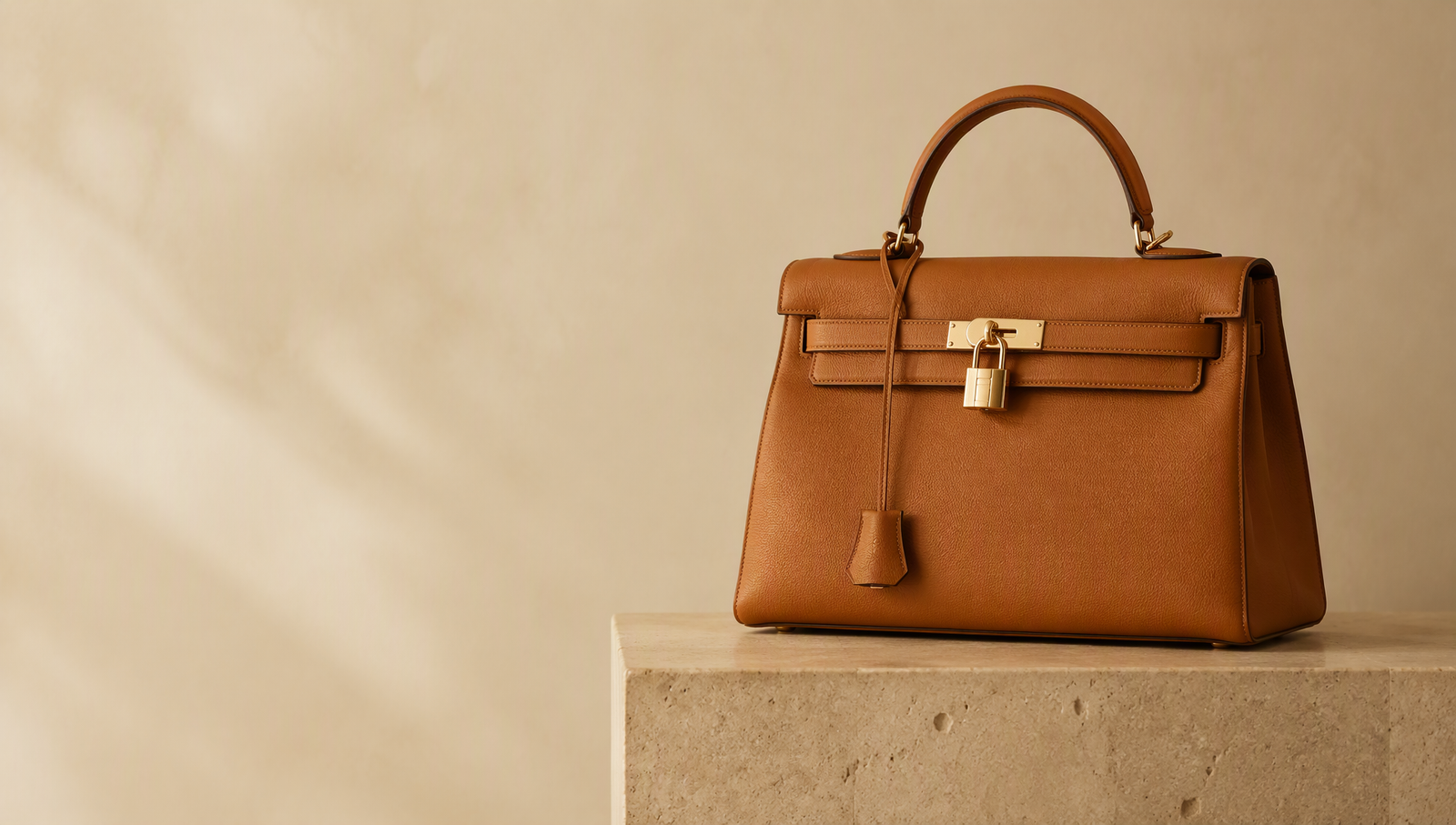
A structured top-handle leather handbag: scarce, handcrafted, and increasingly treated as an investment asset.
Table of Contents
- The Craftsmanship Behind Hermès Bags
- Premium Materials and Uncompromising Standards
- Brand Heritage and Cultural Power
- Scarcity: The Real Pricing Engine
- Why Hermès Bags Are Expensive in the Resale Market
- Are Hermès Bags a Good Investment?
- Hermès International (RMS.PA): What the Stock Market Says
- How to Evaluate If a Hermès Bag Is Worth the Price (With Market Comparison)
- Birkin vs Kelly: Understanding Price Differences
- Luxury as Social Signal
- Durability and Long-Term Value
- Is It Worth Buying a Hermès Bag?
- Frequently Asked Questions About Why Hermès Bags Are Expensive
- Expert Insight: Understanding Luxury Beyond Price
- Final Thoughts on Why Hermès Bags Are Expensive
If you’ve ever wondered why Hermès bags are expensive, the short answer is this: they are priced like scarce, handcrafted assets rather than ordinary accessories — and the data supports it. Prices often start in the five-figure range and can climb far higher on the resale market. At first glance, it might seem irrational. After all, it’s just a handbag — right?
Not exactly.
Understanding why Hermès bags are expensive requires looking beyond fashion and into a combination of craftsmanship, controlled scarcity, cultural power, and financial logic. These bags are not priced like typical accessories because they don’t behave like them.
They function as luxury goods, status symbols, and — more recently — alternative investment assets.
The Craftsmanship Behind Hermès Bags
One of the most important reasons why Hermès bags are expensive lies in how they are made.
Each bag is handcrafted by a single artisan who undergoes years of training before being allowed to produce one. Unlike mass production, where multiple workers handle different stages, Hermès follows a “one artisan, one bag” philosophy.
This process includes:
- Precision saddle stitching done entirely by hand
- Construction that can take over 20 hours per piece
- Individual inspection at multiple stages
As a result, every bag reflects a level of attention that is increasingly rare in modern manufacturing.
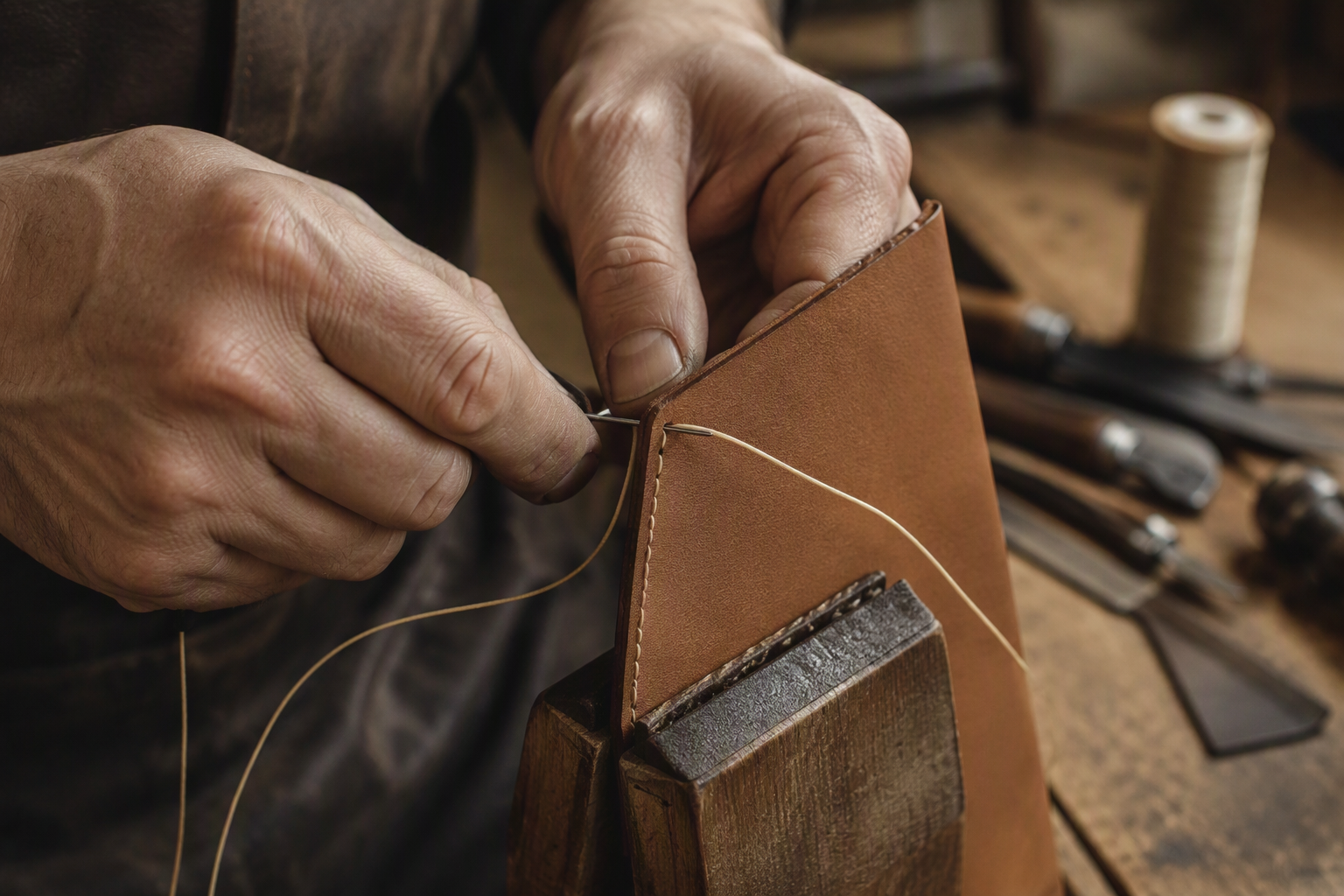
One artisan, one bag: saddle stitching done entirely by hand can take over 20 hours per piece.
Academic research supports the idea that this kind of labor carries value in itself. Tarquini, Mühlbacher & Kreuzer (2022, Journal of Marketing Management) found that the experience of luxury craftsmanship is a distinct dimension of perceived value — consumers don’t just pay for the object, but for the human skill embedded in it.
If you compare this to broader industry practices discussed in the global fashion industry [link], you begin to understand how Hermès operates outside the standard production model.
Premium Materials and Uncompromising Standards
Another key factor explaining why Hermès bags are expensive is the selection of materials.
Hermès does not use generic leather. Instead, it sources:
- Full-grain calfskin with minimal treatment
- Exotic skins like crocodile and ostrich
- Custom-developed dyes that resist fading over time
These materials are not only expensive but also difficult to work with. Only the most skilled artisans can handle them without compromising the final product.
This level of material quality directly connects to broader discussions about what makes luxury handbags valuable [link], especially when durability and aging are considered.
Brand Heritage and Cultural Power
To fully understand why Hermès bags are expensive, you need to consider brand history.
Founded in 1837, Hermès has built a reputation rooted in craftsmanship, not mass marketing. Unlike many luxury brands that rely heavily on visibility, Hermès maintains a controlled presence.
This creates:
- A sense of exclusivity
- Strong brand identity
- Long-term cultural relevance
In contrast to trends explored in the history of logo mania [link], Hermès does not depend on visible branding to signal value. Its recognition comes from form, not logos.
That subtlety is part of what makes it powerful.
Scarcity: The Real Pricing Engine
At the core of why Hermès bags are expensive is a deliberate strategy: scarcity.
| Factor | Impact on Price | Why It Matters |
|---|---|---|
| Craftsmanship | Very High | Handmade by one artisan increases uniqueness |
| Materials | Very High | Premium leather and exotic skins raise cost |
| Scarcity | Extreme | Limited supply drives demand |
| Brand Heritage | High | Legacy builds trust and prestige |
| Resale Value | High | Strong secondary market demand |
Hermès does not simply sell bags to anyone who can afford them. Instead:
- Access is often limited to loyal customers
- Purchase history influences availability
- Production is intentionally restricted
This creates a demand-supply imbalance that drives prices upward.
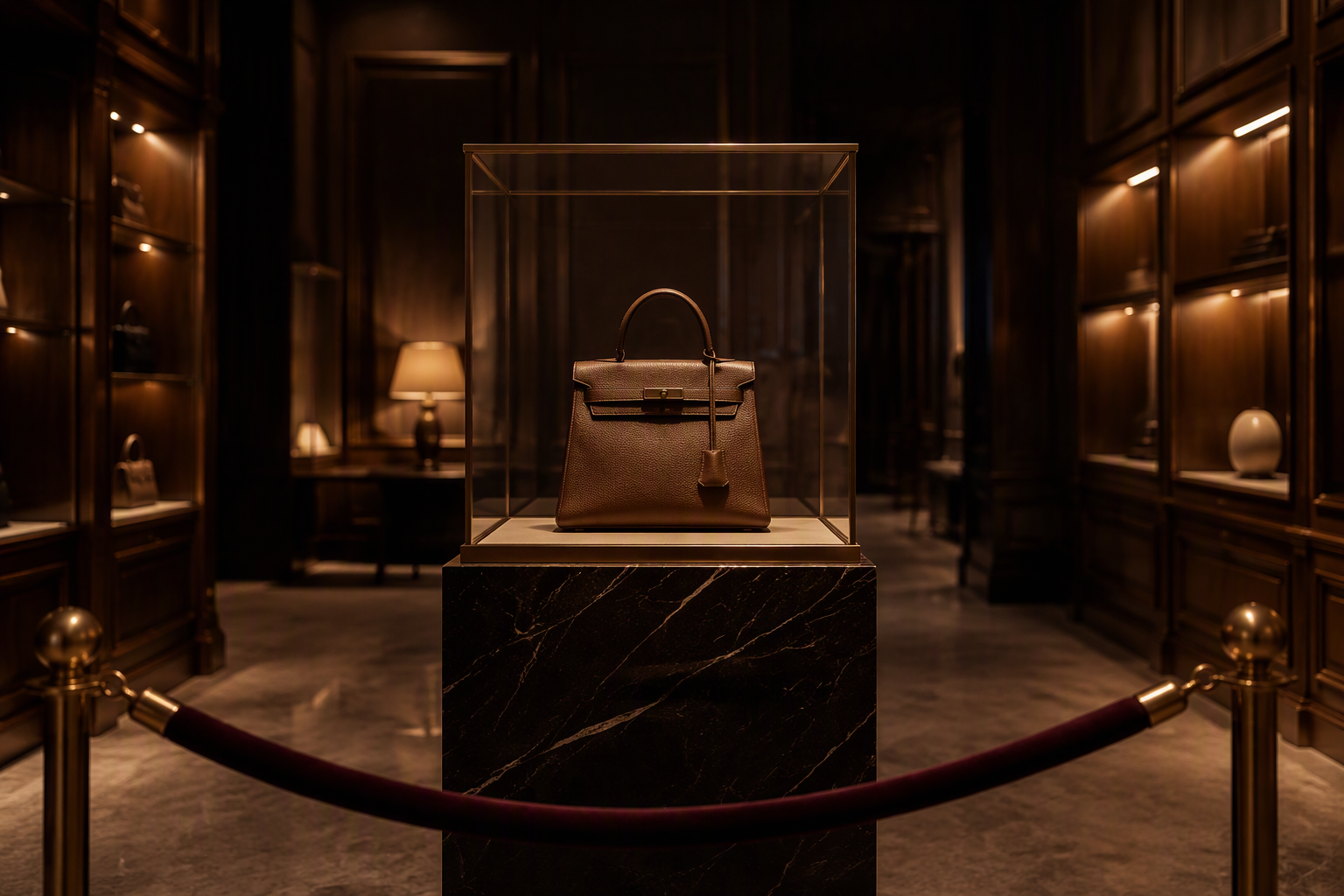
Controlled distribution is the system: limited supply keeps demand permanently ahead of availability.
Consumer-behavior research explains why this works so well. Wu, Lu, Wu & Fu (2012, International Journal of Consumer Studies) showed that product scarcity, combined with consumers’ need for uniqueness, significantly raises perceived value. Jang, Ko, Morris & Chang (2015, Psychology & Marketing) found that “limited edition” scarcity messages directly increase purchase intention — exactly the dynamic Hermès has industrialized.
From an economic perspective, this aligns with principles discussed in the economics of fashion [link], where controlled distribution increases perceived value.
Scarcity is not a side effect. It is the system. As many luxury analysts point out, Hermès does not price its bags based on cost, but on controlled demand.
Why Hermès Bags Are Expensive in the Resale Market
Retail pricing is only part of the story.
To truly grasp why Hermès bags are expensive, you need to look at the resale market.
In many cases:
- Bags sell above retail value
- Rare models appreciate over time
- Demand remains consistently high
This is especially true for iconic pieces like the Birkin, which often appear in comparisons such as Birkin vs Chanel investment value [link].
Unlike most consumer goods, Hermès bags do not depreciate immediately after purchase. In some cases, they do the opposite.
Luxury resale data provides some of the clearest answers to why Hermès bags are expensive. Unlike most consumer goods, these bags often increase in value over time, especially when rarity and condition align. Auction houses and private collectors consistently drive prices beyond retail, reinforcing their position as collectible assets.
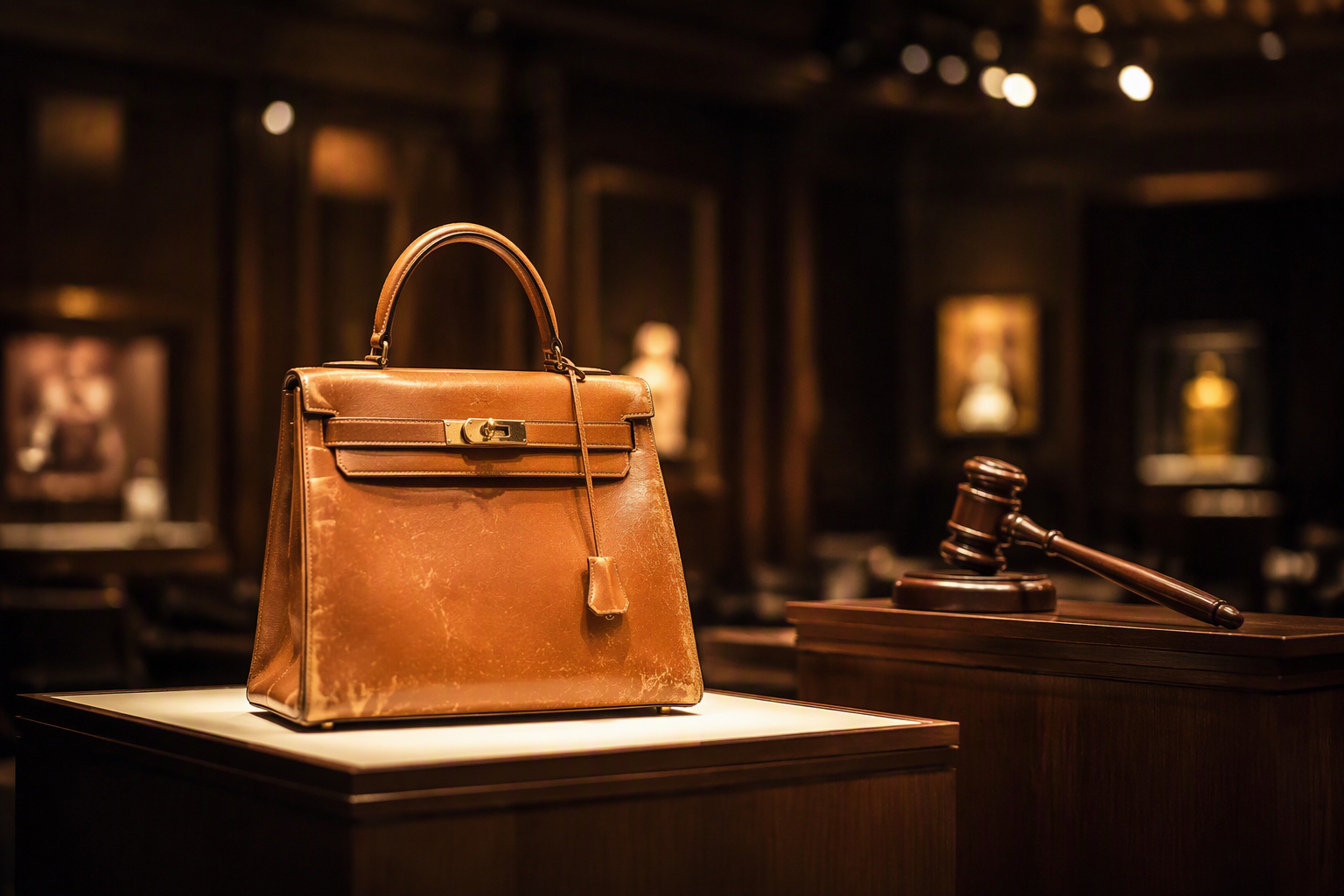
Auction houses and private collectors consistently push rare models beyond retail prices.
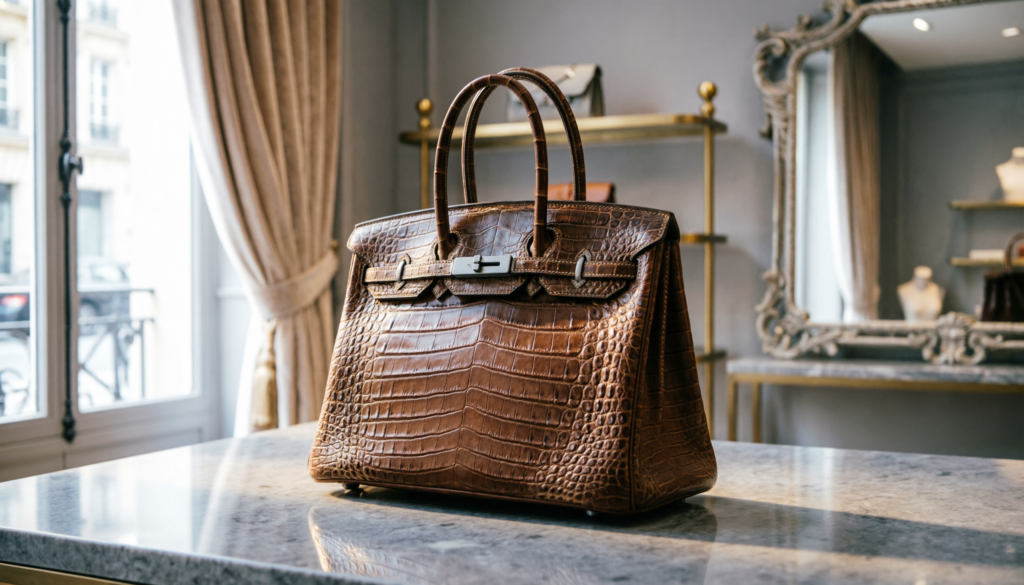
Furthermore, in 2023, a matte white Himalaya Niloticus crocodile Birkin 30 with 18-karat white gold and diamond hardware sold for $450,000 at Sotheby’s, one of the world’s leading auction houses. This level of valuation is not driven by utility, but by exclusivity, craftsmanship, and global demand.
Are Hermès Bags a Good Investment?
This is where the conversation shifts from fashion to finance.
Many buyers are no longer asking only why Hermès bags are expensive. They are asking whether they are worth it as assets.
Several factors support this idea:
- Limited supply
- High global demand
- Strong secondary market
Reports from luxury resale platforms show that certain models have delivered returns comparable to traditional investments over specific periods.
The academic literature takes this seriously. Aït-Sahalia, Parker & Yogo (2004, Journal of Finance) demonstrated that luxury goods carry a risk premium distinct from the equity premium — meaning they behave differently from stocks in a portfolio. Mandel (2009, American Economic Review) analyzed art as both an investment and a conspicuous-consumption good, a framework that maps almost one-to-one onto collectible handbags. And Piiroinen (2014, Arcada/Theseus thesis) examined more than 160 Birkin bags sold at Artcurial auctions, providing rare empirical evidence on Birkin pricing in the secondary market.
The macroeconomic backdrop strengthens the case. According to the IMF World Economic Outlook, US consumer-price inflation jumped from 1.25% in 2020 to a peak of 7.99% in 2022 — and IMF projections don’t see it falling below roughly 2.7–3.2% in 2025–2026. Cash held through that cycle lost purchasing power cumulatively, which is precisely the environment in which scarce real assets attract capital.
Demand, meanwhile, has a solid foundation. World Bank data show US real GDP per capita rose from $56,849 in 2015 to $66,857 in 2024 — a gain of +17.6% — while the US Gini index stayed elevated (41.5 in 2015 to 41.8 in 2024), signaling persistent wealth concentration at the top: exactly the audience competing for restricted luxury supply.
Finally, Hermès’s own price increases have tracked European inflation. France — where the maison prices in euros — saw CPI inflation of 5.90% in 2022 and 5.66% in 2023 (IMF WEO). Retail price hikes of that magnitude lift the reference price for the entire secondary market, supporting the resale value of bags purchased earlier.
While this does not guarantee future performance, it explains why Hermès bags are increasingly viewed alongside other stores of value.
Hermès International (RMS.PA): What the Stock Market Says
For readers who prefer balance sheets to boutiques, Hermès International — listed on Euronext Paris under the ticker RMS.PA — offers a revealing window into the economics behind the bags.
Equity risk and physical-asset value are different bets on the same maison.
Market snapshot (October 8, 2026):
| Metric | Value |
|---|---|
| Current price | €1,262.50 |
| 52-week range | €1,255.00 – €2,300.00 |
| Distance from 52-week high | −45.1% |
| Market capitalization | ~€132 billion |
| P/E (trailing) | 29.4x (vs. LVMH at 17.4x) |
| Dividend (forward) / yield | €18.00 / 1.41% |
The headline is striking: the stock sits roughly 45% below its 52-week high of €2,300 and is down about 39% over the past year. Yet even after that drawdown, investors still pay a P/E of 29.4x for Hermès — versus 17.4x for LVMH. That is the “scarcity premium” in equity form: the market prices Hermès’s waitlist-driven model as structurally superior.
Annual results, 2022–2025 (fiscal year ended December 31, in € millions):
| Year | Revenue | Net Income | Operating Margin |
|---|---|---|---|
| 2025 | €16,001 | €4,524 | 41.8% |
| 2024 | €15,170 | €4,603 | 41.1% |
| 2023 | €13,427 | €4,311 | 42.9% |
| 2022 | €11,601 | €3,367 | 41.5% |
Hermès grew revenue every single year in this window — +15.7% in 2023, +13.0% in 2024, +5.5% in 2025 — while running operating margins above 41% throughout. Few companies in any sector combine that growth with that profitability.
How the three French luxury giants compare (2025):
| Company (Ticker) | Revenue 2025 | Operating Margin | Revenue Growth 2025 |
|---|---|---|---|
| Hermès (RMS.PA) | €16,001M | 41.8% | +5.5% |
| LVMH (MC.PA) | €80,807M | 22.5% (TTM) | −4.6% |
| Kering (KER.PA) | €14,675M | 12.8% (TTM) | −13.0% |
The contrast is stark. LVMH’s revenue shrank two years in a row, and Kering’s net income collapsed from €3.6 billion in 2022 to just €72 million in 2025. Hermès is the only one of the three posting record revenue in 2025.
Dividends tell a similar story of disciplined capital returns. Total dividends paid per calendar year rose from €8.00 in 2022 to €13.00 in 2023, €25.00 in 2024, and €26.00 in 2025 (including extraordinary installments). But the forward yield is only ~1.4% — well below LVMH’s 3.35%. The message: Hermès is a capital-appreciation and pricing-power thesis, not an income play.
Here is the editorial point that matters for bag buyers. The stock fell ~39–45% from its peak, but Birkin and Kelly prices on the resale market did not fall with it. Equity risk and physical-asset value are different things: RMS.PA shares carry market sentiment, earnings multiples, and macro exposure, while the bags’ value is anchored in scarcity, craftsmanship, and retail price increases. Owning the stock and owning the bag are two different bets on the same maison.
How to Evaluate If a Hermès Bag Is Worth the Price (With Market Comparison)
Understanding why Hermès bags are expensive is only part of the equation. To make a smart decision, you need to evaluate how they compare to other luxury handbags in terms of value, demand, and long-term performance.
| Model | Starting Price | Demand Level | Resale Strength | Visibility | Investment Appeal |
|---|---|---|---|---|---|
| Birkin | $12,000+ | Very High | Very High | High | Excellent |
| Kelly | $10,000+ | High | High | Medium | Strong |
| Constance | $7,000+ | Medium | Medium | High | Moderate |
| Evelyne | $3,000+ | Low | Low | Low | Weak |
Understanding why Hermès bags are expensive is one thing. Deciding whether to buy one is another.
Here’s how to evaluate it properly:
1. Compare Market Position
As shown above, Hermès operates at a different level of scarcity and value retention compared to other luxury brands.
2. Analyze the Model
Focus on high-demand pieces like Birkin and Kelly, which consistently outperform others in resale value.
3. Check Material and Rarity
Exotic skins and limited editions significantly increase long-term value.
4. Understand Liquidity
Not all luxury bags resell easily. Hermès models tend to have stronger buyer demand globally.
5. Think Beyond Fashion
Hermès bags function more like collectible assets than seasonal accessories.
For a deeper understanding, explore how luxury pricing works in what makes luxury handbags valuable [link].
Birkin vs Kelly: Understanding Price Differences
Not all Hermès bags are equal, which further explains why Hermès bags are expensive overall.
The two most famous models behave differently:
Birkin:
- Higher demand
- Stronger resale liquidity
- More visible status symbol
Kelly:
- More structured design
- Slightly lower resale volatility
- More understated appeal
For a deeper comparison, you can explore how different luxury items perform in comparisons between top luxury bags [link].
Understanding these differences helps explain price variation within the brand itself.
Luxury as Social Signal
There is another layer behind why Hermès bags are expensive that is often overlooked: social meaning.
Luxury items function as signals. They communicate:
- Economic status
- Cultural awareness
- Group belonging
This is not a metaphor — it is formal economics. Bagwell & Bernheim (1996, American Economic Review) developed the canonical theory of “Veblen effects,” showing that demand for certain luxury goods rises with price precisely because a high price makes them credible signals of wealth. In other words, the expense is not incidental to the product; for a Veblen good, the expense is part of the product.
This aligns with broader ideas about fashion and social status [link], where clothing becomes a form of non-verbal communication.
Hermès sits at the top of this hierarchy because it balances visibility with discretion.
Durability and Long-Term Value
Unlike fast fashion, Hermès bags are designed to last for decades.
This durability plays a major role in why Hermès bags are expensive.
Owners often report:
- Minimal structural wear
- Strong resale condition after years of use
- Timeless design that avoids obsolescence
Research supports the link between longevity and luxury value. Hudders et al. (2013, International Journal of Marketing Research) found that perceived quality and durability are core drivers of luxury value perception — a bag that survives decades of use carries its purchase price across a far longer time horizon.
This connects directly with ideas explored in the value of vintage fashion [link], where longevity increases desirability.
Is It Worth Buying a Hermès Bag?
After understanding why Hermès bags are expensive, the final question becomes personal.
It may be worth it if:
- You value craftsmanship
- You understand luxury markets
- You see it as a long-term asset
It may not be worth it if:
- You prioritize affordability
- You follow short-term trends
- You expect immediate accessibility
The decision depends less on price and more on perspective.
Frequently Asked Questions About Why Hermès Bags Are Expensive
Why are Hermès bags more expensive than Chanel?
Hermès focuses more on craftsmanship and scarcity, while Chanel operates at a larger production scale.
Do Hermès bags increase in value?
Some models, especially Birkin, can appreciate depending on rarity and condition.
Why is it hard to buy a Hermès bag?
Access is controlled through purchase history and limited supply.
Are Hermès bags handmade?
Yes, each bag is crafted by a single artisan.
What is the cheapest Hermès bag?
Entry-level models exist but are still positioned within the luxury category.
Is a Birkin bag a good investment?
It can be, especially if you understand market demand and choose the right model.
Expert Insight: Understanding Luxury Beyond Price
Luxury pricing is not just about production cost. It reflects brand positioning, market psychology, and perceived value.
Hermès has mastered the balance between scarcity and desirability, making its products not only expensive but consistently in demand. The company’s financials confirm what the waitlists suggest: a 41.8% operating margin in 2025 and a valuation premium over every peer show that this balance is a durable business model, not a marketing illusion.
For a broader perspective, it helps to explore how luxury operates within fashion and social status [link], where value is often defined by perception rather than utility.
Final Thoughts on Why Hermès Bags Are Expensive
At a surface level, the answer to why Hermès bags are expensive seems simple: luxury branding.
But in reality, it’s a combination of:
- Handcrafted production
- Premium materials
- Controlled scarcity
- Cultural positioning
- Investment potential
Very few products operate across all these dimensions at once.
That’s why Hermès doesn’t just sell bags.
It sells permanence in a market defined by change.
Sources & Data Notes
- Market and financial data: Yahoo Finance (tickers RMS.PA, MC.PA, KER.PA), extracted October 8, 2026, ~18:53 UTC. Euronext Paris quotes delayed ~15 minutes. All values in euros unless stated. Kering listed as KER.PA (formerly PPR.PA).
- Macroeconomic data: IMF, World Economic Outlook (WEO), indicator PCPIPCH — “Inflation, average consumer prices (annual % change),” United States and France, 2020–2026 (2025–2026 are WEO projections; France used as eurozone proxy). World Bank, World Development Indicators, indicators NY.GDP.PCAP.KD (GDP per capita, constant 2015 US$), NY.GDP.MKTP.KD.ZG (real GDP growth) and SI.POV.GINI (Gini index), United States and France, 2015–2024.
- Academic sources cited: Bagwell & Bernheim (1996, American Economic Review); Aït-Sahalia, Parker & Yogo (2004, Journal of Finance); Mandel (2009, American Economic Review); Piiroinen (2014, Arcada/Theseus thesis); Wu, Lu, Wu & Fu (2012, International Journal of Consumer Studies); Jang, Ko, Morris & Chang (2015, Psychology & Marketing); Tarquini, Mühlbacher & Kreuzer (2022, Journal of Marketing Management); Hudders et al. (2013, International Journal of Marketing Research).
This article is for educational purposes only and does not constitute financial or investment advice.